


Maximizing Juice Yield and Efficiency: The Role of Screw Presses in Fruit and Vegetable Processing
In the fruit and vegetable juice industry, the goal is simple: extract the highest possible yield of pure, high-quality juice while minimizing waste and operational costs. Among the various dewatering and extraction technologies available, the screw press has emerged as a highly efficient, reliable, and cost-effective solution.
What Is a Screw Press?
A screw press is a physical dewatering extrusion equipment that separates liquids from solids using mechanical pressure. A typical screw press consists of several key components: a drive system, feed hopper, screw conveyor (screw auger), screen mesh, pneumatic back-pressure device, water collection tank, and a sturdy frame.
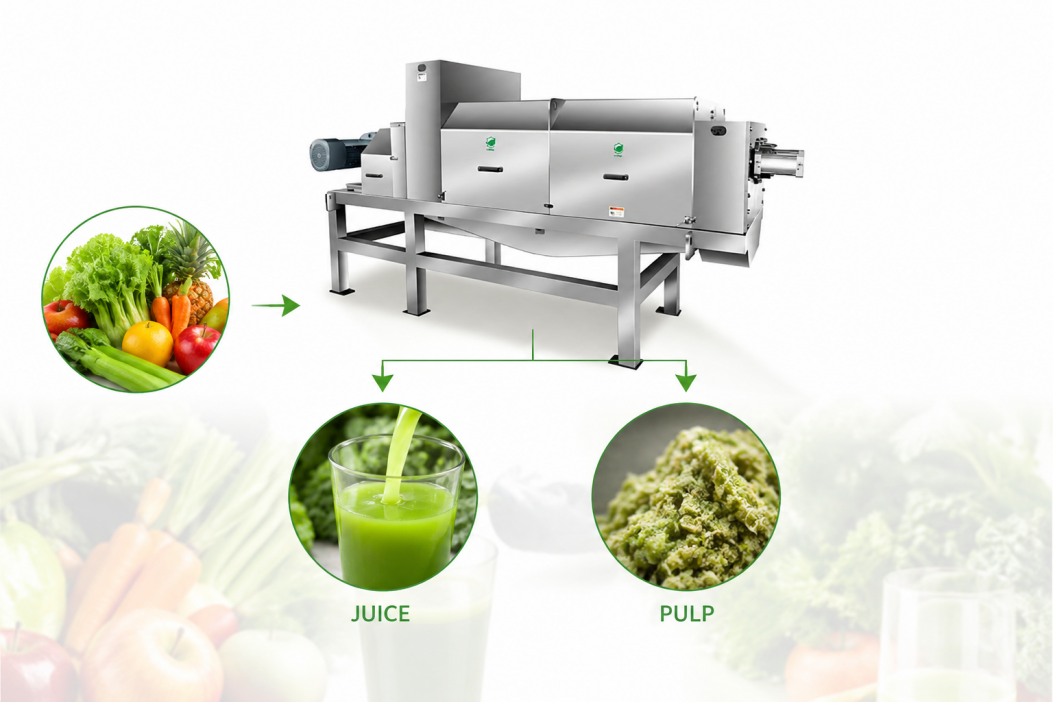
During operation, fruit or vegetable pomace, such as apple pulp, grape skins, carrot residue, or orange peels, enters the machine through the feed hopper. The rotating screw conveyor gradually transports the material forward while increasing pressure. This mechanical force squeezes the juice out of the solids. The extracted liquid passes through the screen mesh and is collected via the liquid outlet, while the dehydrated pulp continues moving forward, overcoming the resistance of the pneumatic back-pressure device, and finally exits through the solids discharge port.
Why Choose a Screw Press for Juicing Applications?
1. Low Operating Cost
Unlike thermal drying or evaporation methods, the screw press operates on purely mechanical principles. It requires no external heating source, significantly reducing energy consumption. For juice producers, this translates directly into lower electricity bills and higher profit margins.
2. Continuous Operation with High Throughput
The screw conveyor is designed based on rigorous mechanical calculations and axial thrust optimization. These design improvements effectively eliminate common operational problems such as material slippage, bridging (blockage at the inlet), backflow, or auger binding. As a result, the equipment can run continuously for extended periods, handling large volumes of fruit or vegetable mash efficiently without frequent interruptions.
3. Low Moisture Content in Discharged Pomace
Different fruits and vegetables have widely varying physical properties — moisture content, proportion of bound water, viscosity, fiber content, water absorption, toughness, and organic/inorganic composition. A screw press can be customized to match the specific characteristics of the target material. By precisely calculating and adjusting parameters such as screw taper, compression ratio, and back-pressure settings, the press achieves maximum mechanical squeezing action. This leaves the discharged pomace with minimal residual moisture, meaning more juice extracted and less waste.
4. Wear and Corrosion Resistance
Key wear parts of the screw press are treated with specialized surface hardening techniques. The screw flight edges are reinforced with welded alloy tips for added abrasion resistance. Moreover, critical components are manufactured from 304 Stainless Steel, which offers excellent resistance to acids, alkalis, and corrosion. This is particularly important when processing acidic fruits (e.g., citrus, apples, berries) or abrasive vegetable pulps (e.g., carrots, celery). The robust construction greatly extends the equipment’s service life, reducing maintenance and replacement costs.
5. No Chemical Additives Required
Depending on the material being processed, the screw press can be equipped with screen mesh gaps ranging from 0.3 mm to 1.0 mm. This physical filtration eliminates the need for flocculants, coagulants, or other chemical agents. As a result:
• No extra chemical costs are incurred.
• The extracted juice remains 100% natural, meeting consumer demand for clean-label products.
• The discharged pulp can be repurposed for animal feed, composting, or other secondary uses without chemical contamination.
Practical Applications in Juicing
• Apple Juice Production: Screw presses efficiently extract juice from apple pomace with high yield and clear separation.
• Citrus Juicing: They handle orange, lemon, and grapefruit pulp, recovering valuable juice while producing dry peel residue.
• Vegetable Juicing: Carrot, celery, and tomato pulps are processed effectively, achieving excellent liquid-solid separation.
• Berry Processing: Even soft, high-fiber berries like raspberries and strawberries can be pressed with proper screen selection.
Conclusion
For fruit and vegetable juice processors seeking a reliable, energy-efficient, and chemical-free extraction method, the screw press offers outstanding performance. Its ability to run continuously, handle diverse materials, produce dry pomace, and resist corrosive wear makes it an indispensable tool in modern juice production lines.
By integrating a properly engineered screw press, processors can reduce waste, lower operating costs, and deliver a purer, more natural juice product to the market.